
Over my career, I’ve encountered some financial advisors who like to substitute preferred stocks in place of bonds1 within their clients investment portfolios. Is this a good idea? I would argue that it’s a terrible idea. But before we get to why, let’s look at the structural differences between preferred stocks and bonds:
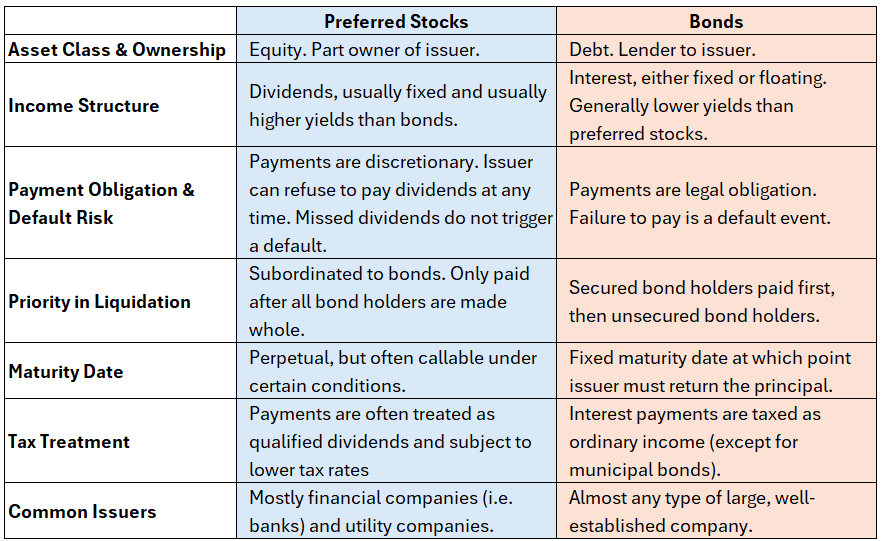
Based on the chart above, you can see that preferred stocks do have some advantages over bonds. They generally receive higher yields and better tax treatment. And the reality is that most preferred stocks perform well over time.
So why is owning preferred stocks in place of bonds a bad idea? Here are two reasons:
1 – Preferred stocks exhibit stock-like volatility
Case in point is the financial crisis of 2008-09. The iShares Preferred and Income Securities ETF (PFF), tumbled about 60%. Over the same time period, bond prices actually went up.
The reality is preferred stocks will generally exhibit stock-like risk/reward characteristics (it’s in the name after all). For example, if you skip ahead to the table in #2, you’ll notice that preferred stocks can exhibit about 90% of the volatility of the S&P 500 vs bonds which have volatility closer to 20% of the S&P 500.
Most people own bonds to help diversify their portfolio in an effort to reduce volatility and smooth out the ups and downs. But the thing about volatility is that it really shows up in a big way at the worst possible time (i.e. during a crisis or market sell off). Just take a look at the CBOE Volatility Index (VIX) during any big market crisis – you’ll see a often see a huge jump in volatility around the time stock market prices drop:
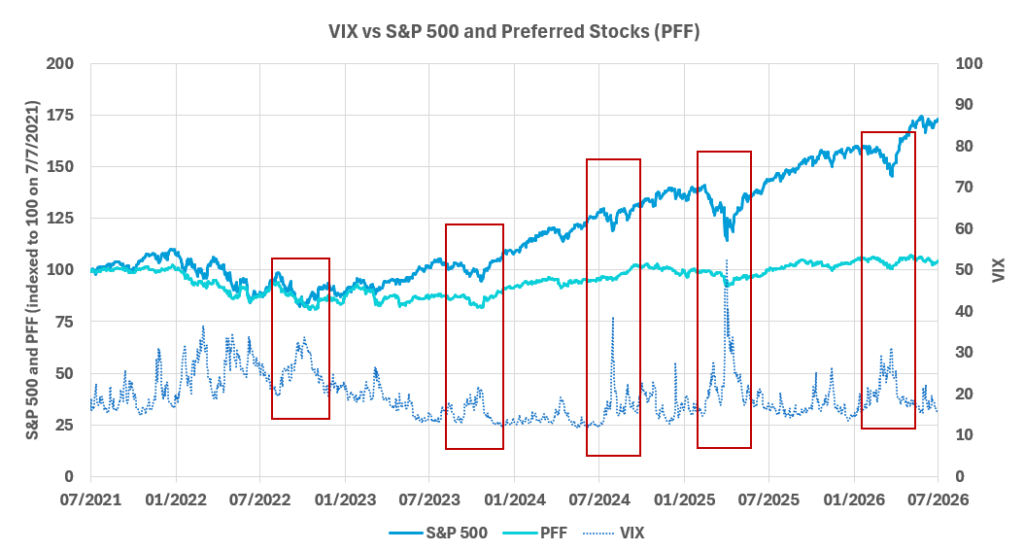
You can imagine that if you replace your bonds with preferred stocks, and the rest of your portfolio remains invested in common stocks, then it’s possible that you could see the value of your entire portfolio crater all at once. Many investors (especially retirees) will want to avoid this situation.
2 – Preferred stocks are inferior to alternatives
Preferred stocks exist in a grey area between regular stock shares (i.e. common stocks) and bonds. They are often considered a hybrid of both. But from my point of view, if you want to own stocks, then just own common stocks! Preferred stocks take on many of the same risks as common stocks, but without the same upside potential as preferreds generally pay fixed dividend stream (and remember that many common stocks also pay dividends).
And if your goal is to manage volatility and secure your principal, then bonds stand out as a much better alternative than preferred stocks. Bonds have more legal protections and guarantees against catastrophic losses. They also generally have way less volatility.
Except in unique situations, preferred stocks just don’t seem like a good tool for everyday investors.
A few years ago, Morningstar compared the volatility and returns of bonds, common stocks, and preferred stocks:
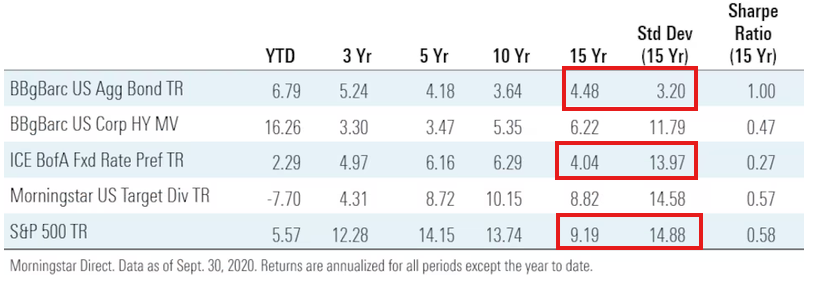
As you can see, preferred stocks offered a “worst of both worlds” result over this time period. 94% of the volatility of common stocks, but with less than half the total return. And over the same period, bonds had a better return than preferreds, but with a less than a quarter of the volatility. Not ideal. Certainly this is only one data point and there will no doubt be times when preferreds will outperform bonds on both an absolute and risk-adjusted basis, but to me, preferred stocks just seem like a poor tool to use for most everyday investors.
Thanks for reading!
1 – By “bonds”, I’m referring to high-quality, investment grade corporate bonds or US Treasury/Agency bonds. Essentially only high-grade bonds with little risk of default. High-yield or “junk” bonds would require a different analysis.